December 1, 2025
Eleventh Circuit Swiftly Dismisses Trump's RICO Lawsuit Against Clinton and Others
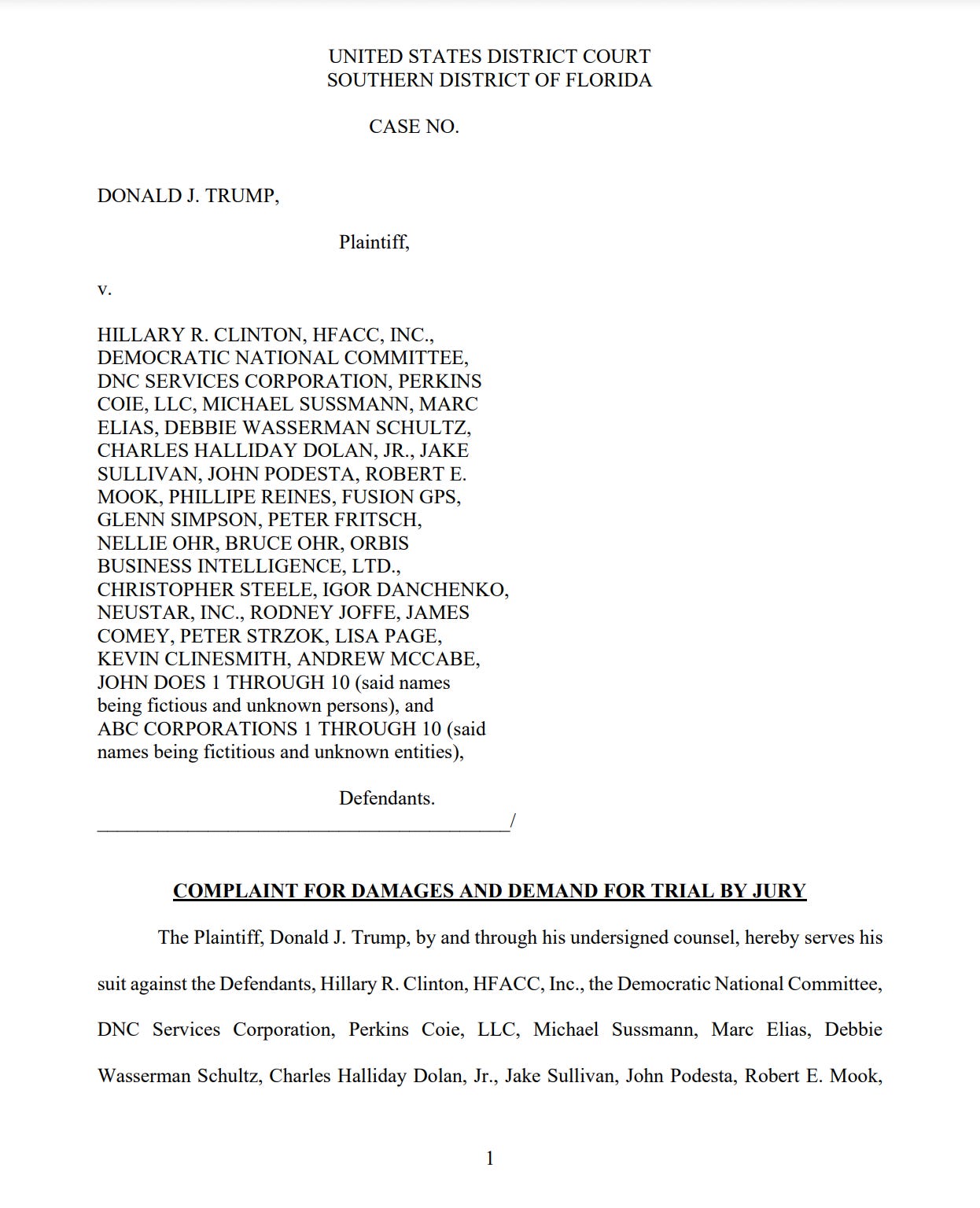
In a remarkably quick decision, the Eleventh Circuit Court has dismissed a lawsuit filed by Donald Trump against Hillary Clinton, the Democratic National Committee (DNC), and numerous other defendants. The court took just eight days after hearing oral arguments on November 18 to reject the attempt to revive what has been described as a RICO trollsuit. This rapid decision starkly contrasts with the average duration between oral arguments and decisions across federal circuits, which is typically 76 days, and 129 days in the Eleventh Circuit.
The lawsuit, initially filed in March 2022 by Trump's attorneys Alina Habba and Peter Ticktin, accused Clinton, the DNC, and others of a racketeering conspiracy centered around the publicization of the Steele dossier and the instigation of the Russia investigation. However, the court found the suit to be fundamentally flawed, criticizing it for procedural deficiencies and for being a "shotgun pleading," a type of legal complaint that is overly lengthy and unspecific, making it difficult for defendants to respond appropriately.
The case was first dismissed by Judge Donald Middlebrooks, who described the amended complaint as a "quintessential shotgun pleading" and questioned the professional conduct of Trump's legal team. The dismissal led to the defendants successfully moving for about $1 million in attorneys' fees, further emphasizing the court's disapproval of the frivolous nature of the lawsuit.
Upon appeal, the Eleventh Circuit panel, including judges appointed by George W. Bush, Donald Trump, and Joe Biden, echoed the sentiments of the lower court. They criticized the vague and all-encompassing nature of the legal arguments presented and noted that many of Trump's legal points were forfeited due to failure to raise them in a timely manner.
This case is part of a broader pattern of litigation by Trump, involving various entities from major news organizations to the Pulitzer Prize Board, often criticized as attempts to threaten and burden his political adversaries through the legal system. The court's swift and decisive rejection of this case sends a clear message not just to Trump but also to his legal representatives about the seriousness with which procedural rules and legal ethics are taken in the judicial system.
The decision comes as a stern warning to Trump's legal team, particularly in the conservative-leaning Eleventh Circuit, which has indicated that it will not tolerate legal strategies that abuse judicial resources. This ruling also sets a precedent that could influence how similar lawsuits by Trump are treated in the future, potentially curbing what some see as a strategy of using the courts to engage in political battles.