January 6, 2026
Third Amendment Controversy Ignites as Hilton Hotel Refuses to House ICE Officers
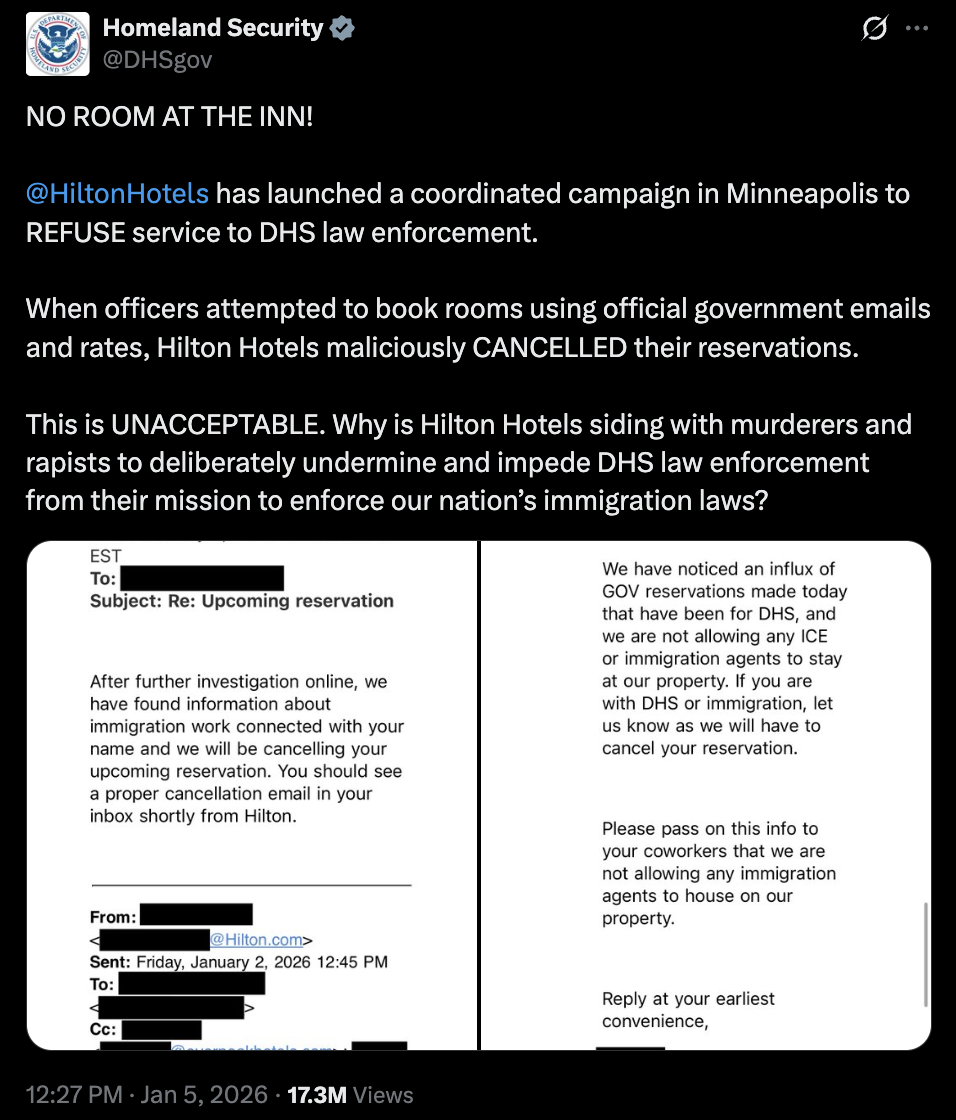
Everyone, brace yourselves! It's only the first week of 2026, and Minnesota is already the stage for a brewing Third Amendment showdown. In a bold move, a Hilton Hotels franchisee refused to accommodate ICE forces deployed in a recent anti-immigration operation. Instead of bowing to private business decisions, the Department of Homeland Security (DHS) took to social media to express displeasure, sparking nationwide debates over constitutional rights.
The Third Amendment, which prohibits the quartering of soldiers in private homes during peacetime without the owner's consent, has rarely been spotlighted in modern legal discussions. However, this incident may propel it to the forefront. Last year, the possibility of a Third Amendment conflict was hinted when the administration deployed troops in American cities, facing strong opposition and judicial scrutiny.
The controversy began when ICE officers, needing lodgings in Minnesota, had their reservations at a Hampton Inn, a subsidiary of Hilton, abruptly canceled. This decision likely stemmed from the franchise's desire to avoid the backlash experienced by other hotels involved in similar situations, prioritizing the comfort of their current guests over potential picket lines.
However, DHS's response was not as accommodating. They demanded explanations from hotel management, emphasizing that such refusal was "UNACCEPTABLE," despite it falling well within constitutional rights. Hilton's corporate office quickly responded, stating that their hotels are open to all, but this stance faced criticism when a clandestine operation revealed that the hotel still maintained its no-accommodation policy for DHS.
This situation raises questions not just about the Third Amendment but also about the dynamics of government influence over private enterprises. The concept of 'jawboning,' where the government informally pressures businesses to align with its policies, is at the heart of this debate. While previously discussed in contexts like public health, applying it to enforce government lodging needs introduces a new layer of complexity.
Legal experts are watching closely, speculating whether this could lead to a landmark court case that would test the boundaries of the Third Amendment. If Hilton's franchisee loses its license over this stance, they might argue that DHS's pressure constituted a financial penalty, thus warranting legal action.
In summary, this unfolding scenario in Minnesota could potentially make constitutional history, challenging long-standing interpretations of the Third Amendment and government influence. As this case develops, it could answer pressing questions about the limits of governmental power in peacetime and the sanctity of private business decisions. Keep your eyes peeled — this is one for the history books!