January 7, 2026
Minneapolis Tragedy: ICE Agent Fatally Shoots Woman Amid Controversial Operation
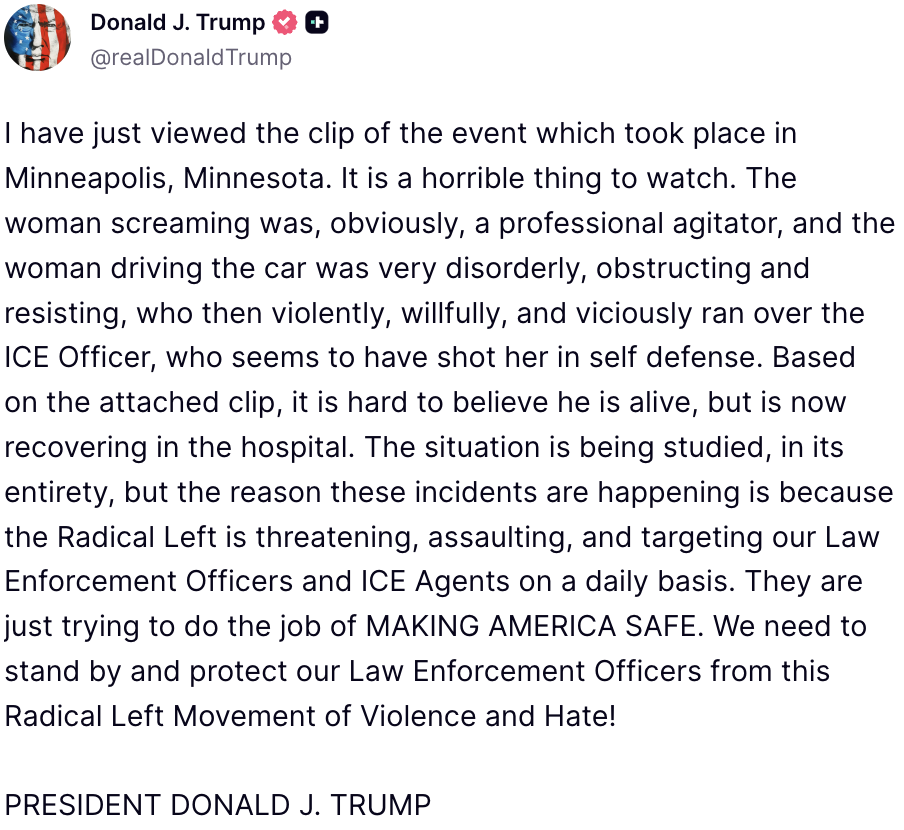
In a distressing incident this morning in Minneapolis, a 37-year-old woman was fatally shot by an ICE agent. The woman, a U.S. citizen and a legal observer, was not the subject of any law enforcement investigation, according to Minneapolis Police Chief Brian O’Hara.
The incident occurred as part of a Minnesota operation targeting the local Somali immigrant community, purportedly to draw attention away from a day care scandal. Despite extensive previous media coverage of the scandal, the administration's tactics have escalated to a deadly level.
Masked ICE officers stopped the woman’s Honda Pilot on Portland Avenue. Video footage reveals a tense exchange where officers demanded she exit the vehicle. As she attempted to drive away, an officer shot her three times, leading to her death at Hennepin Healthcare.
The Department of Homeland Security defended the officer, claiming the woman had "weaponized her vehicle." However, Homeland Security Secretary Kristi Noem's characterization of the event as "an act of domestic terrorism" was met with skepticism and criticism, especially given the context of the recent January 6 events.
Mayor Jacob Frey, having viewed the footage, dismissed the DHS's statement as misleading, indicating a stark contrast between the official narrative and video evidence.
The broader implications of this event are troubling. ICE has been under scrutiny for lowering recruitment standards and aggressive tactics. This incident underscores the systemic issues within ICE, exacerbated by aggressive recruitment and questionable training practices.
The legal aftermath is equally concerning. Local authorities, including Hennepin County Attorney Mary Moriarty, are pushing for a thorough investigation, although federal agents often enjoy broad protections that could prevent serious consequences.
Qualified immunity, a doctrine that shields government officials from civil liability in many cases of misconduct, is likely to play a central role in how this case unfolds legally. This doctrine, heavily criticized for allowing law enforcement misconduct to go unpunished, may protect the officer involved from repercussions, aligning with past trends where similar protections lead to a lack of accountability.
As the community mourns, the debate intensifies over law enforcement practices, recruitment standards, and the legal shields that protect officers in such tragic circumstances. The incident not only highlights systemic issues within federal law enforcement but also the profound human cost of such policies. The call for reform grows louder amidst this tragedy, with many demanding a reevaluation of both ICE's operational tactics and the legal protections afforded to federal agents.