January 16, 2026
Florida and Texas Part Ways with ABA on Law School Accreditation: A Dive into the Ideological Shift and Its Implications
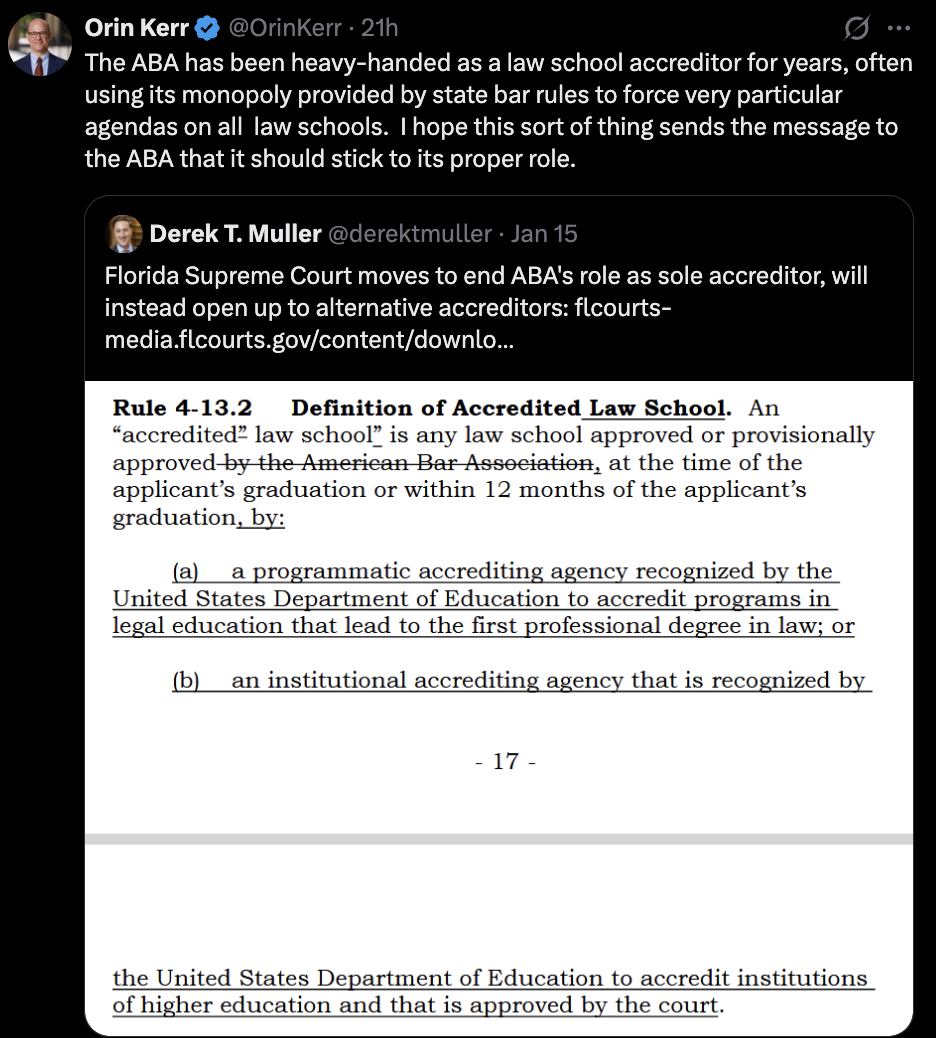
In a striking move away from conventional educational accreditation standards, Florida and Texas have decided to cut ties with the American Bar Association (ABA) as the sole accreditor for law schools within their jurisdictions. This decision marks a significant shift towards embracing alternative accrediting bodies, which many critics argue could reshape the landscape of legal education in both states.
Florida's Supreme Court recently declared its intention to open the doors to new accreditors, framing this action as a step towards enhancing the quality and affordability of legal education, and promoting a free exchange of ideas. However, skeptics view this move as a thinly veiled attempt to infuse legal education with a particular political ideology, rather than an effort to genuinely diversify and enrich academic discourse.
This skepticism is bolstered by the recent dismissal of the new dean of a law school in Arkansas, a decision influenced by the state's political leanings, which casts doubt on the proclaimed commitment to non-discrimination and free exchange of ideas.
Meanwhile, Texas has also taken a similar path, raising eyebrows with its rapid policy shifts that appear to align with a broader national trend of political interference in educational content and administration. This includes the controversial decision by Texas A&M to cancel a philosophy course on moral issues, citing the inclusion of topics related to race, gender, and sexual orientation as a violation of new educational policies.
These policy changes in Florida and Texas reflect a deeper cultural battle over the control of educational content, which has seen instances like the intervention at the New College of Florida, where drastic changes led to a significant drop in school rankings and student retention under a heavily politicized administration.
The core of the controversy lies in the interpretation of diversity and inclusion initiatives. Proponents of the ABA’s standards argue that fostering an understanding of diverse perspectives is crucial for preparing law students to serve a heterogeneous client base effectively. Critics in states like Florida and Texas, however, perceive these initiatives as ideological impositions that detract from traditional legal education.
Legal professionals and educators across the nation are watching closely, as the outcomes of these decisions could set precedent for other states, potentially leading to a fragmented educational system where the value of a law degree could vary significantly based on the political climate of the state in which it was obtained.
The dissenting opinion from Florida Justice Jorge Labarga highlights the potential risks of deviating from ABA’s tried-and-tested accreditation standards, pointing out the importance of consumer protection, public accountability, and institutional transparency in legal education.
As Florida and Texas chart their new courses, the legal community and prospective law students must navigate an increasingly politicized educational environment, where the quality and acceptance of their professional training might depend heavily on the prevailing political winds.