February 2, 2026
DOJ Resorts to Twitter for Recruiting Assistant U.S. Attorneys Amidst Growing Crisis
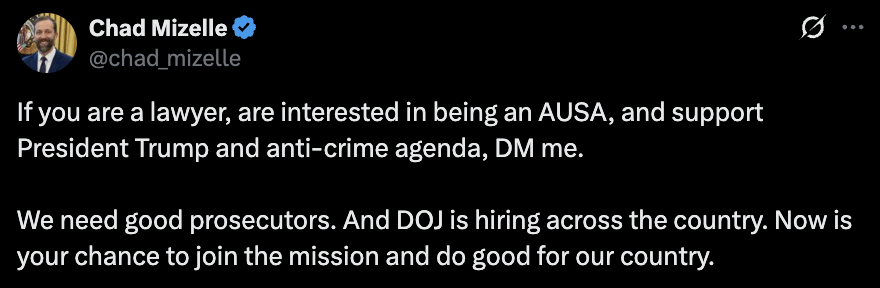
As desperation hits the Department of Justice (DOJ), the agency has turned to an unconventional recruitment strategy: social media appeals for Assistant U.S. Attorneys (AUSAs). This move underscores the severity of the staffing crisis following a year plagued by high attrition and dwindling morale.
Traditionally a beacon for ambitious legal minds, the DOJ finds itself in dire straits. The past year's challenges have included demands to drop corruption cases and initiate baseless prosecutions, prompting many AUSAs to resign. This exodus has been so impactful that the Justice Department now seeks candidates through Twitter, a platform once infamous for less savory content.
The recruitment call was published by Chad Mizelle, former DOJ Chief of Staff, whose authority to hire remains questionable after his departure last fall. His initial tweet even featured a closed direct message function, which was only corrected after public prompting — a small but telling oversight that reflects broader organizational issues.
This recruitment strategy is not just a reflection of desperation but also a possible shift in hiring practices, moving away from traditional rigorous processes to more spontaneous online interactions. Critics might compare it to assembling a team for a casual sport rather than staffing a critical national institution.
Moreover, this approach coincides with the DOJ's recent controversial actions, such as using military lawyers in roles traditionally reserved for civilian prosecutors and employing AI to draft legislation. These measures have raised concerns about the dilution of professional standards and the potential for significant legal missteps.
The situation has reached a point where the administration’s tactics have been likened to "flooding the zone," a strategy that risks not just inefficiency but the integrity of the Justice Department itself. With essential legal boundaries and professional ethics at stake, the DOJ’s current trajectory could lead to further turmoil and diminished trust in its role as a pillar of American law and justice.
The implications of such unconventional recruitment practices are profound, hinting at a deeper crisis within the DOJ and the government's approach to upholding law and order. As the department continues to navigate these tumultuous waters, the legal community and the public alike watch with bated breath, hoping for stability and integrity in the face of growing challenges.