March 3, 2026
Justice Gorsuch Claims Founding Fathers' Party Habits Illuminate Current Constitutional Debates
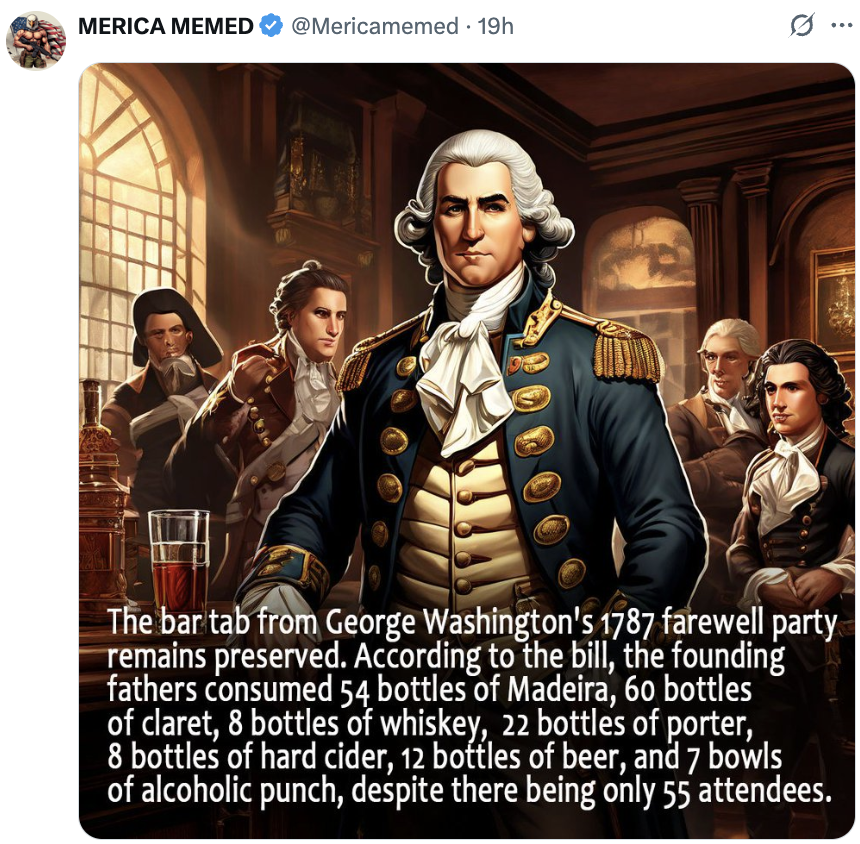
In a recent court hearing, Justice Neil Gorsuch made a lively defense of Originalism by pointing to the robust partying habits of America's Founding Fathers. During the Supreme Court's deliberation on the constitutionality of a statute barring controlled substance users from possessing firearms, Gorsuch argued that understanding the Founders' social habits could inform contemporary legal standards.
The statute in question, 18 U.S.C. § 922(g)(3), targets "unlawful users" of controlled substances, drawing parallels to early American laws that restricted the rights of "habitual drunkards." Gorsuch highlighted historical perspectives, noting, "The American Temperance Society considered you an 'occasional drunkard' if you had up to eight shots of whiskey a day."
Justice Gorsuch humorously depicted the Constitutional Convention as a "frat party," suggesting that the crafting of foundational American documents was fueled by significant alcohol consumption. His remarks included anecdotes about John Adams's daily hard cider and James Madison's pint of whiskey routine, questioning whether such habits would classify them as "habitual drunkards" under modern interpretations.
The justice's commentary came during the case of United States v. Hemani, which involves a Texas man who uses marijuana while legally owning a firearm. The court's discussion extended to other justices as well, with Justice Barrett questioning the implications of using prescription drugs like Ambien without a prescription, and Justice Kagan bringing up the use of Ayahuasca.
This case is seen as a test of the Court's 2022 Bruen framework, which mandates that gun regulations align with the "Nation’s historical tradition." Critics argue that this approach may lead to absurdities, trapping constitutional interpretation in a cycle of historical analogy that might not translate neatly into modern governance.
Gorsuch's arguments suggest a broader critique of historical literalism in constitutional interpretation. By referencing the Founders' indulgence in alcohol, he challenges the current application of historical standards to modern issues, suggesting that the principles behind the laws should guide their application, not the specific historical behaviors.
As the Supreme Court navigates these complex issues, the relevance of the Founders' personal habits to today’s legal standards remains a provocative and contentious point. The case continues to unfold, highlighting the challenges of interpreting a centuries-old document in the context of contemporary societal norms and legal requirements.