March 17, 2026
Revolutionary Tool Unveiled to Detect AI-Generated Errors in Legal Documents
In a legal landscape increasingly infiltrated by artificial intelligence, the prestigious law firm Gordon Rees recently faced severe criticism for submitting court filings peppered with AI-generated inaccuracies, marking their third such incident. This recurrent issue highlights a growing concern over the reliability of AI tools in legal practices.
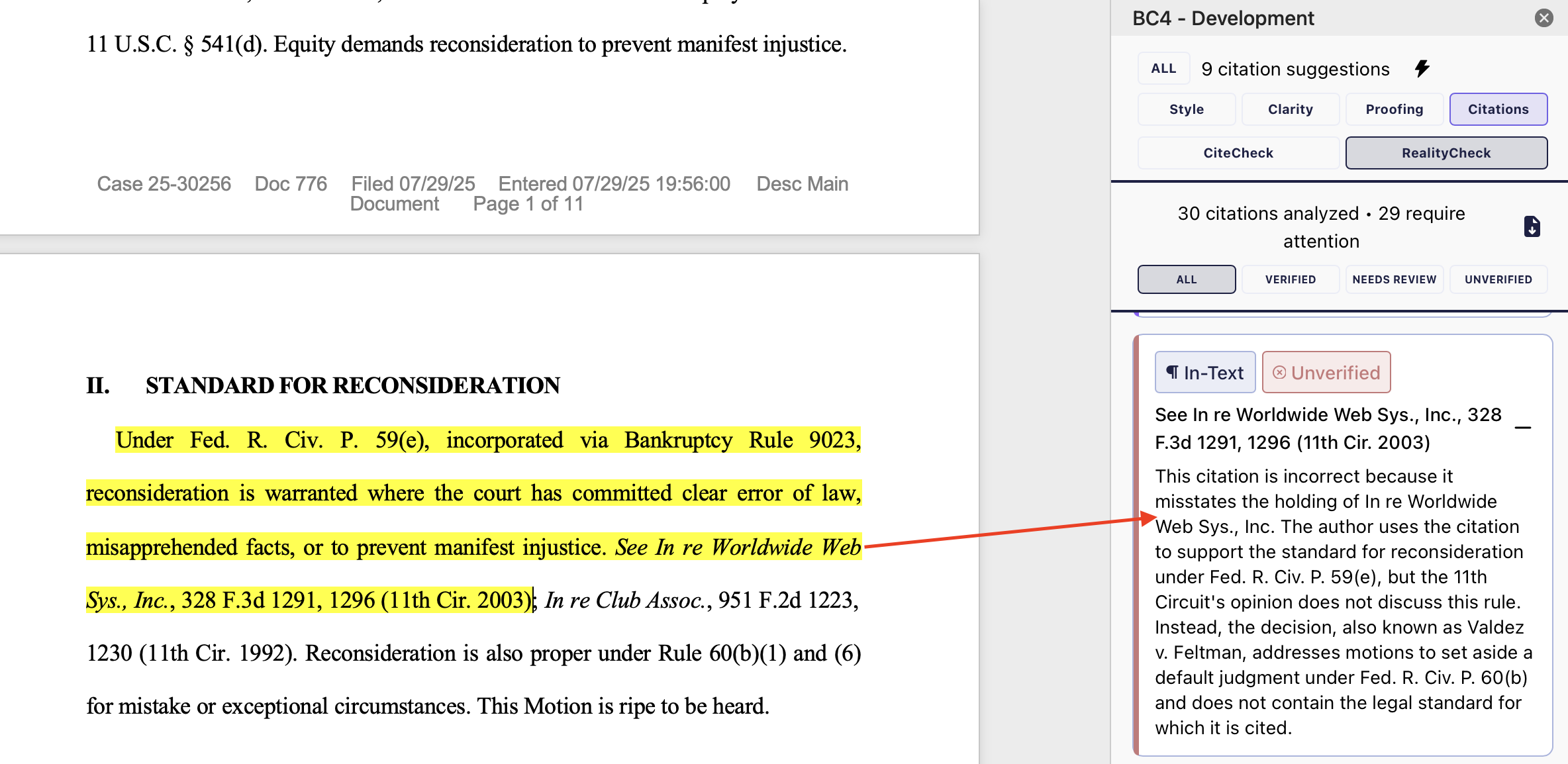
Following a recent critique, Ross Guberman, the founder of BriefCatch, introduced RealityCheck, a cutting-edge tool designed to combat these so-called AI hallucinations. RealityCheck enhances the verification of legal citations by combining deterministic citation validation with AI-assisted analysis. This dual-layer approach not only checks the authenticity of case names and court details against established legal databases but also ensures the accuracy of quoted language within the cited rulings.
During its pre-launch demonstration, RealityCheck was tested against a previously acknowledged flawed brief from Gordon Rees, successfully identifying and labeling erroneous citations with an intuitive color-coded system: Green for verified, Yellow for caution, and Red for incorrect. This system offers immediate, visual feedback on the accuracy of citations, potentially revolutionizing how legal documents are reviewed and authenticated.
The urgency for such tools is underscored by research from Damien Charlotin, who has cataloged over 1,000 legal cases affected by AI hallucinations. These incidents underscore the risky reliance on AI by legal professionals, who sometimes blame the technology itself for the inaccuracies rather than their misuse of it.
BriefCatch is now rolling out RealityCheck to its clients in federal and state courts, aiming to shift the professional standard. By integrating RealityCheck, legal practitioners and firms can preemptively identify and correct citation errors before filings reach the court, fundamentally changing the stakes of legal documentation accuracy.
As AI continues to permeate the legal field, tools like RealityCheck are becoming essential for maintaining the integrity and trustworthiness of legal proceedings. They not only assist in safeguarding the reputation of legal firms but also enhance the overall quality and reliability of legal documentation in an era increasingly dominated by technology.