March 20, 2026
Trump Sues Harvard Over Alleged Discrimination Against Jewish Students
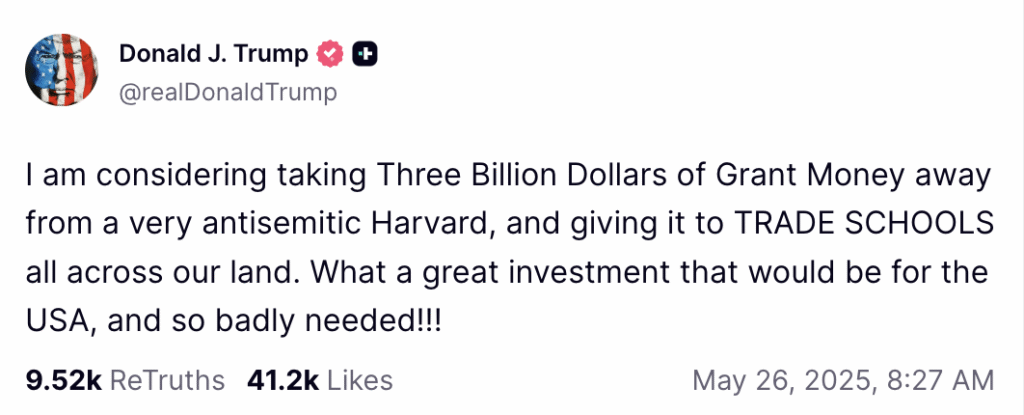
President Donald Trump's administration has launched a third legal battle against Harvard University, filing a Title VI lawsuit that accuses the prestigious institution of creating a hostile environment for Jewish and Israeli students. This aggressive move follows unsuccessful attempts to impose sanctions and cut federal funding aimed at the university.
The lawsuit, disclosed by the Justice Department, claims that Harvard's campus became increasingly hostile towards Jewish and Israeli students following the October 7 attack by Hamas on Israel. Instances cited in the 44-page complaint include students hiding their yarmulkes under baseball caps, theft of a mezuzah from a dorm room, and anti-Semitic threats and insults being upvoted on a Harvard-exclusive online platform.
Despite these allegations, Harvard appears to have taken steps to address these issues. The university had earlier responded to two private Title VI lawsuits — Kestenbaum v. Harvard and Brandeis Center v. Harvard — by adopting the International Holocaust Remembrance Alliance's definition of antisemitism, extending its non-discrimination policies to Jewish and Israeli students, committing to annual antisemitism training, and establishing a partnership with an Israeli university.
The Department of Justice's current lawsuit seeks a severe penalty, proposing that Harvard be found in violation of Title VI since early October 2023, which could require the university to return billions in federal grants and potentially cut off future federal funding. Critics argue that the remedy proposed seems excessively punitive and may not serve the interests of the Jewish students it claims to protect. The lawsuit suggests appointing an outside monitor to enforce policies against protesters, raising questions about the implications for free speech and the practical impact on campus dynamics.
Judge Richard Stearns, designated to handle the case due to its relation to the previous lawsuits, faces a complex decision. He previously noted Harvard's response to antisemitism as inconsistent, yet did not fully adjudicate the claims due to early settlements in the related cases. The outcome of this new lawsuit remains uncertain, particularly with the administration's apparent motive to incite a crisis in higher education.
This legal action represents a significant escalation in the ongoing confrontation between the Trump administration and elite academic institutions, reflecting broader tensions and challenges within the higher education sector in the United States. As the case progresses, it will undoubtedly attract national attention, highlighting issues of free speech, discrimination, and the role of federal oversight in educational environments.