April 10, 2026
Pentagon's Press Policy Saga: Legal Gymnastics and Media Lockout
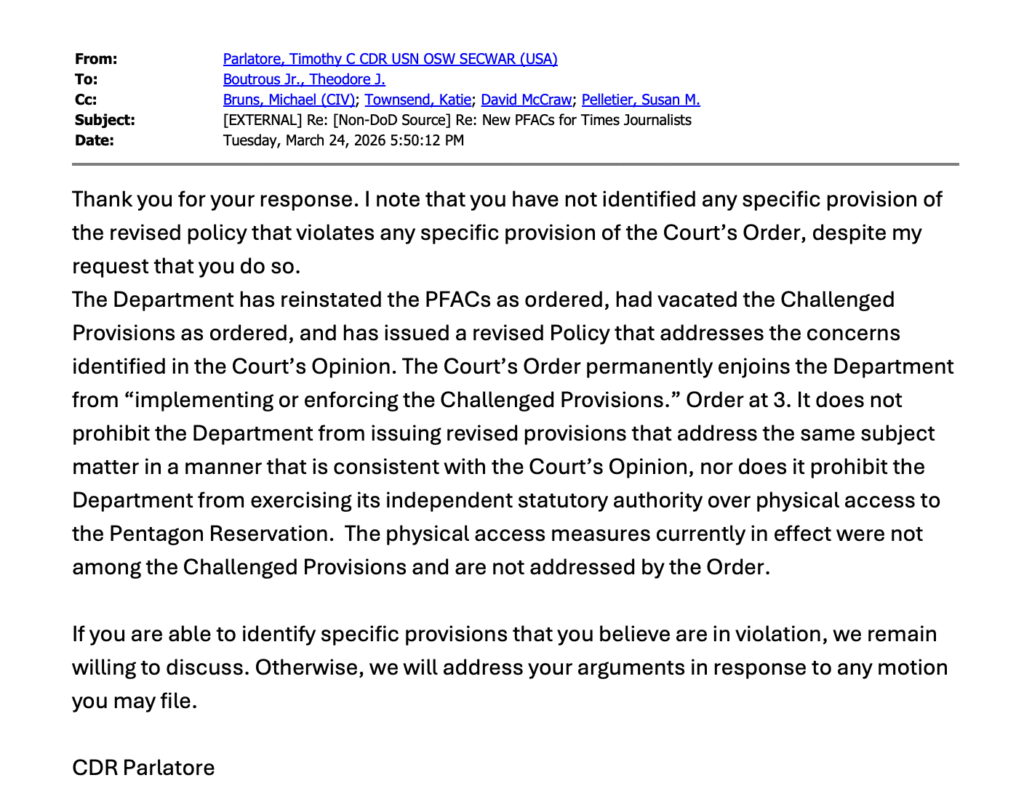
In a recent ruling that could be likened to a legal high-wire act, Judge Paul Friedman once again struck down the Pentagon's controversial press policy, marking the second such decision within a month. The Department of Defense's (DoD) approach has been compared to performing acrobatics with legal interpretations, much like Pete Hegseth's renowned pull-ups.
The saga began when Defense Secretary Pete Hegseth, a former Fox News weekend host, took dramatic measures to restrict mainstream media access to the Pentagon, demanding that journalists refrain from publishing any "unauthorized" information. This move led to a mass surrender of Pentagon Facilities Alternate Credentials (PFACs) by reporters, signaling a stark refusal to comply with what many saw as a muzzle on free press.
This policy was quickly challenged in court, and Judge Friedman did not mince his words, stating, "The Department cannot simply reinstate an unlawful policy under the guise of taking 'new' action... Nor can the Department take steps to circumvent the Court’s injunction and expect the Court to turn a blind eye." The judge emphasized that the initial policy aimed to replace "disfavored journalists" with those more agreeable to the Pentagon's narrative, constituting clear viewpoint discrimination.
Despite the court's decision, the DoD issued a revised interim policy, which superficially altered the language but maintained stringent access restrictions. Reporters now found themselves relocated to a less accessible Pentagon library annex, with access to the main building severely limited. This move was met with further legal challenges, highlighting ongoing tensions between the government's control of information and constitutional press freedoms.
The Department's legal maneuvers have not gone unnoticed. Commander Timothy Parlatore, the architect of the policy, candidly noted that the new policy "used more words to say the same thing," inadvertently admitting to the superficial nature of the revisions. This admission became a focal point in subsequent legal proceedings, underscoring the ongoing struggle between the DoD and the media.
The implications of this case extend far beyond the corridors of the Pentagon. It touches on the broader issues of transparency, press freedom, and the public's right to be informed about military affairs without undue government filtration. Judge Friedman's remarks underline the constitutional stakes at play, emphasizing that the attempts to control the narrative are not just administrative overreaches but challenges to the very principles of American democracy.
As the Department has appealed the decision, the legal battle is set to continue. This case represents not only a confrontation over media access to military operations but also a critical test of the balance between national security and the safeguarding of democratic values. The outcome may well set significant precedents for how government agencies interact with the press, shaping the landscape of American journalism and its role in holding power to account.