April 21, 2026
AI or Not, Kash Patel's $250 Million Lawsuit Sparks Debate
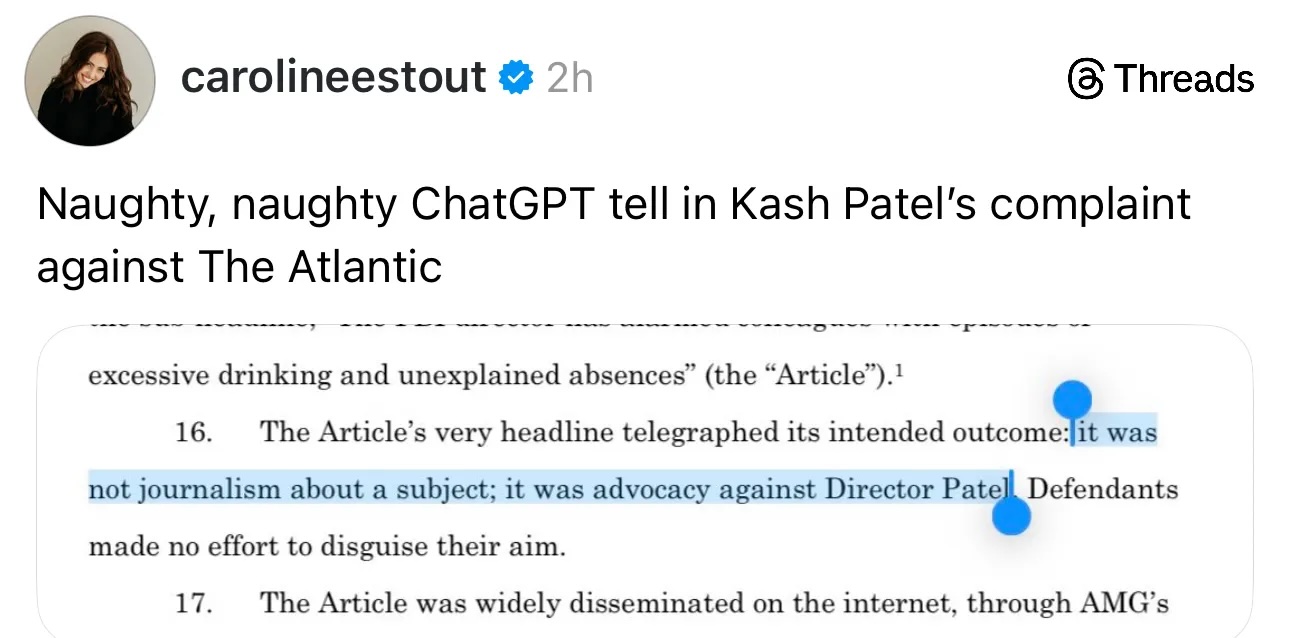
Kash Patel's $250 million defamation lawsuit against *The Atlantic* has triggered discussions far beyond its legal claims, raising eyebrows with its potentially AI-generated content. The lawsuit, demanding a hefty sum, was filed to strategically avoid anti-SLAPP laws, but it has been criticized for its lackluster presentation and questionable contents that include spelling errors and unusual phrasing.
The legal community is buzzing not just about the merits of Patel's claims but the nature of the lawsuit's drafting. Caroline Stout, a keen observer, highlighted what she terms "Digiorno Parallelism"—a stylistic marker that might suggest the involvement of AI. This type of phrasing is commonly seen as a hallmark of automated writing, raising questions about the authenticity and origin of the document.
Errors such as "feable" instead of "feeble" and "politices" in place of "politics" or "policies" might typically suggest human error. However, these could also be indicative of the types of phonetic mistakes that large language models (LLMs) can make when generating text based on sound rather than conventional spelling rules.
Despite these AI-esque slip-ups, there are clear signs of human input. The complaint contains several unnecessary editorial comments and emotive language that an AI, typically programmed to maintain a neutral and professional tone, would not normally produce without specific instructions to do so.
Intrigued by the blend of potentially AI-generated text and human writing, the document was analyzed using an AI detection tool, TextGuard. While tools like TextGuard can sometimes mistakenly flag stylized legal documents as the product of AI due to their repetitive and formulaic nature, they provide a useful starting point for analysis.
Using AI to draft legal documents isn't inherently problematic. Under tight deadlines, AI tools can assist in structuring complaints based on documented facts and established formats. What matters is the oversight and final editing by human lawyers to ensure the accuracy and appropriateness of the legal arguments presented.
The debate over AI's role in legal document preparation reflects a broader conversation about the integration of technology in law practice. While AI can enhance efficiency and consistency, its usage in sensitive tasks like drafting legal complaints must be carefully managed to avoid errors and maintain the professional standards expected in legal proceedings.
The discussion surrounding Patel's lawsuit, therefore, isn't just about whether the claims are valid but also about how modern legal practices are evolving with technology. Whether or not AI was used in this case, the legal community must grapple with these tools' implications, ensuring they complement rather than compromise the lawyering process.