May 27, 2026
Pope's Perspective on AI Could Reshape Legal Education Norms
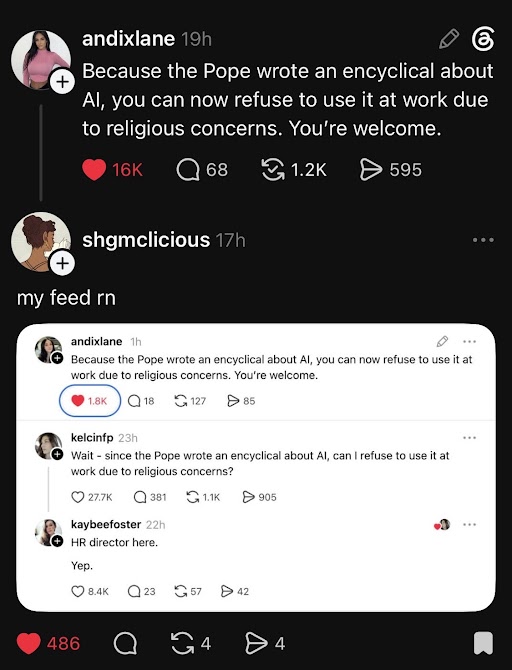
In a world increasingly governed by technology, Pope Leo's recent reflections on the ethical use of artificial intelligence (AI) have sparked significant discussions, especially within legal academia. The Pope's document, "Magnifica Humanitas: On Safeguarding the Human Person in the Time of Artificial Intelligence," while not directly targeting educational policies, has inadvertently poised itself to influence them, particularly around the contentious issue of religious exemptions in AI-assisted education.
Pope Leo's call for a principled approach to AI aligns with a broader ecclesiastical reflection on modern ethical dilemmas. His concerns resonate not just within the walls of the Vatican but also in institutions grappling with the integration of AI in educational settings. For instance, UC Berkeley Law recently implemented a stringent AI policy, citing pedagogical integrity. This move contrasts with more lenient approaches elsewhere but highlights the variances in how AI is perceived and utilized across educational landscapes.
Utah's new legislation, which permits students to opt out of content conflicting with their religious beliefs, underscores the complexities introduced by such religious and ethical considerations. Originally intended to address more traditional content disputes, this law is now a potential tool for students opposing the use of AI in their coursework on religious grounds. The broader implications for legal education are profound, raising questions about the balance between technological advancement and religious freedoms.
The challenge for educators is to navigate these waters where technology, law, and personal belief intersect. Accommodations might need to be made for students who, on religious grounds, decline to engage with AI-generated content. This situation places a unique burden on legal educators to either demonstrate that their materials are free from AI influence or to provide alternatives that respect student convictions.
The ongoing debate also touches on the judiciary's role in these matters. As the separation of church and state is a cornerstone of American jurisprudence, courts are generally reluctant to adjudicate on the validity of religious beliefs in educational settings. This judicial deference underscores the delicate balance between respecting religious diversity and maintaining academic standards.
In essence, the discourse following Pope Leo's statements on AI is not just about the ethical use of technology but also about how these technologies intersect with personal and religious beliefs in educational environments. As legal education continues to evolve with AI, the sector must remain sensitive to the diverse ethical landscapes of its student body, preparing for a future where technology and tradition frequently collide.