June 15, 2026
Legal Ethics Roundup: Judge Ross Issues Second Apology, Lawyer Chesebro Reinstated, and More Ethical Controversies Unfold
Welcome to another intriguing week in the realm of legal ethics, where the lines between law, morality, and professional conduct continue to blur, creating a compelling narrative for anyone vested in the legal world.
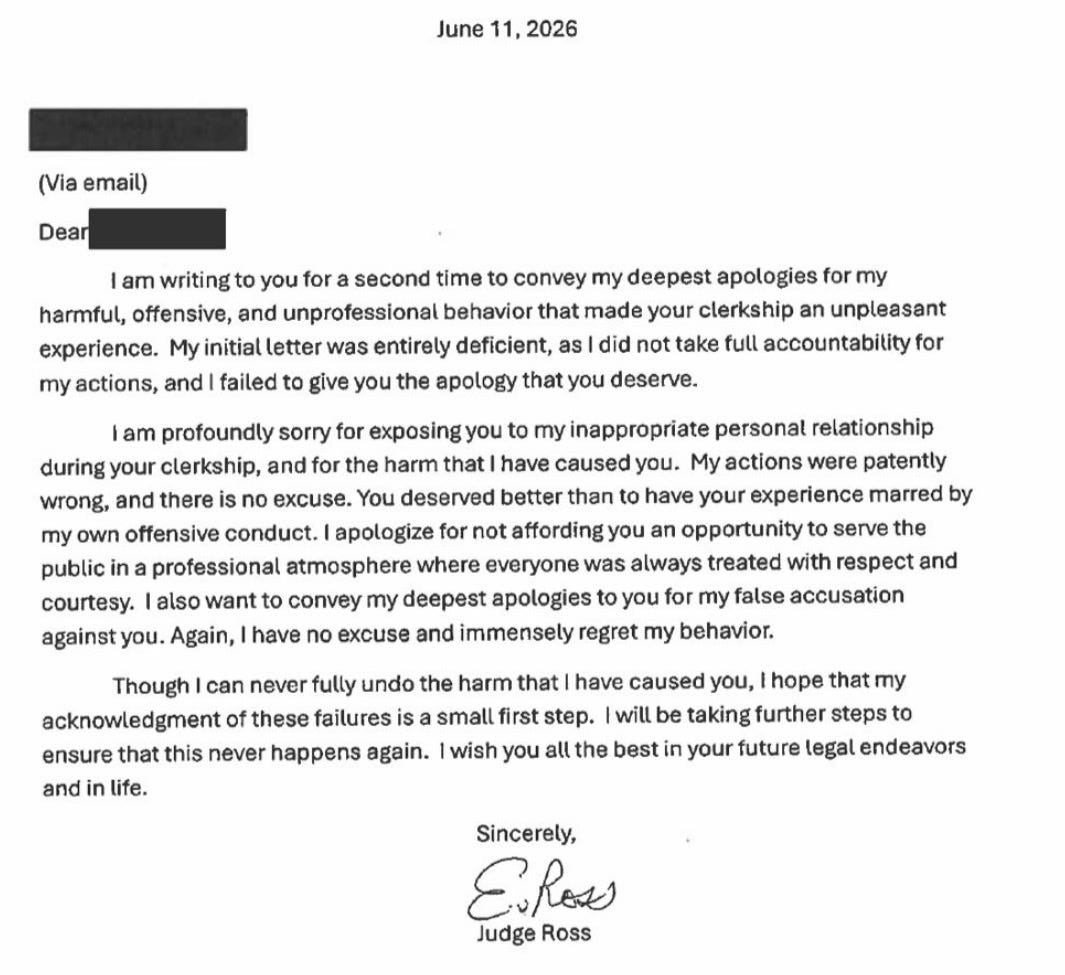
In a notable development, Judge Eleanor Ross has issued a new apology for her in-chambers affair among other misconducts, in a rare judicial move prompted by public outcry and demands for more substantial disciplinary actions. The public's growing skepticism towards the leniency of judicial discipline highlights a critical concern about accountability in the judiciary.
Adding to the drama in the legal field, Kenneth Chesebro, a lawyer previously affiliated with Donald Trump, has been reinstated to practice law in Florida despite his guilty plea in Georgia related to the 2020 presidential election debacle. This decision, as controversial as it sounds, follows his exoneration under Georgia’s First Offender Act, which has sparked a debate on the consistency of legal penalties and the principles of comity between states.
The legal community has also seen a significant movement with 88 law school deans across the United States uniting to endorse the Principles for the Independence of the Legal Profession. This collective stance aims to safeguard judicial independence and maintain the integrity of legal practices against political and external pressures, a crucial step given the current polarized climate.
In a less flattering light, a former federal prosecutor, Jennifer Kerkhoff Muyskens, faces a six-month suspension. This decision comes after revelations that she used misleadingly edited videos as evidence during the 2017 anti-Trump protest cases. This incident underscores the critical need for ethical integrity in prosecutorial conduct and the repercussions of its breach.
Furthermore, the legal ethos was tested with the news of Justice Samuel Alito’s son, Philip Alito, working as a political appointee in the Treasury Department, which raised questions about potential conflicts of interest and the need for recusal in related cases. This situation has reignited discussions about the transparency and ethical boundaries concerning the family members of high-ranking officials.
Amid these swirling controversies, the legal landscape continues to evolve, with calls for more stringent ethical oversight and clearer guidelines to navigate the complex interplay between law, personal conduct, and public expectations. As these stories unfold, they not only dominate headlines but also shape the foundational principles governing the legal profession.