June 26, 2026
Former Senator Ben Sasse's Supreme Court Satire Mistaken for Serious Commentary in Wall Street Journal Op-Ed
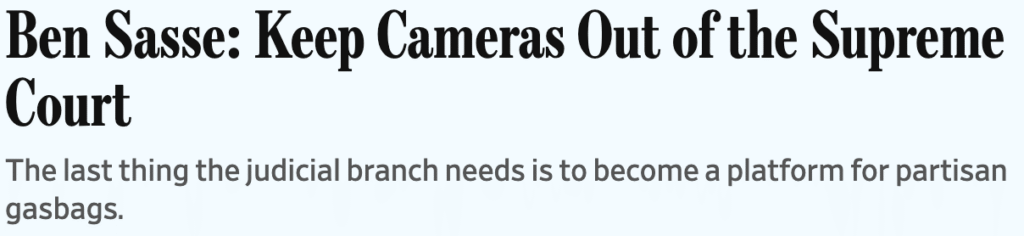
In what seemed to be a masterclass in satire, former Nebraska Senator Ben Sasse penned an op-ed so dry, it could have been mistaken for a desert. The piece, which appeared in the Wall Street Journal, argued against the introduction of cameras in the Supreme Court, presenting a slew of arguments that one might expect to find on the pages of The Onion rather than a distinguished publication.
As I read through the op-ed, I found myself chuckling at the absurdity, convinced it was a spoof. Sasse's arguments danced on a line between ludicrous and laughable, making me question whether the WSJ editors had been duped into publishing a satirical piece under the guise of serious opinion.
The op-ed was framed around the idea that cameras would transform the Supreme Court into a theatrical spectacle, detracting from the solemnity and seriousness of judicial proceedings. Sasse whimsically lamented the potential for justices to perform for the cameras rather than engaging in genuine legal deliberations. This notion reached its peak when discussing how televised congressional hearings have devolved into opportunities for legislators to chase soundbites rather than substance.
However, as absurd as the arguments might sound, there's a creeping realization that Sasse is not in on the joke — he's dead serious. His earnestness in delivering what could have been perfect satire reveals a deeper, more disconcerting narrative about his views on the judiciary and its insulation from public scrutiny.
This op-ed comes in the wake of various antics and controversies surrounding the Supreme Court, from Justice Alito's recent outburst to historical instances of justices engaging in overtly partisan behavior. Sasse's satirical masterpiece—intentional or not—ironically underscores the already theatrical nature of the current Supreme Court, where decisions often seem more aligned with political leanings than impartial justice.
What's particularly amusing — or alarming, depending on your perspective — is Sasse’s portrayal of the Supreme Court as a bastion of apolitical stoicism. This is the same man who actively participated in the political theater around Supreme Court nominations, proving that the line between the judiciary and politics is not as clear as he claims.
In conclusion, whether Sasse intended to write a satire or a serious critique, his piece fails to acknowledge the inherently political environment of the Supreme Court. Instead, it reads like a script from a political comedy, blurring the lines between satire and reality in ways that are both hilarious and profoundly unsettling.
Read the full op-ed here: [Ben Sasse: Keep Cameras Out of the Supreme Court](https://www.wsj.com/opinion/free-expression/ben-sasse-keep-cameras-out-of-the-supreme-court-1402e5fb) [Wall Street Journal]