July 8, 2026
Biglaw Merger Blues: Legacy Cadwalader Staff Confront Massive Timekeeping Task
Hogan Lovells Cadwalader, the product of a recent high-profile merger that took effect on July 1, has been the subject of much discussion, particularly regarding its swift integration process. Firm leadership, including CEO Miguel Zaldivar, has been publicly optimistic, outlining ambitious growth plans especially in New York, and swiftly moving to establish new office leadership in Washington, D.C.
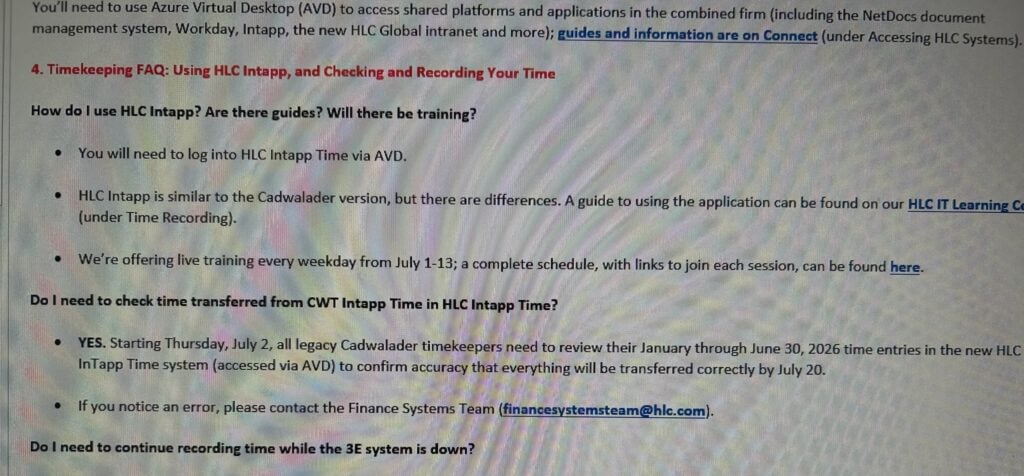
However, beneath the surface of these public declarations and apparent smooth transitions, challenges are emerging, particularly for the staff from the legacy Cadwalader firm. According to insider reports from Above the Law, these employees face the daunting task of revisiting and verifying six months’ worth of time entries, a process described by one tipster as a monumental headache given the detailed and minute nature of legal timekeeping.
The merger has necessitated the adoption of a unified timekeeping system, HLC Intapp, which, despite its similarities to the Cadwalader system, has significant enough differences to require a painstaking review of past entries. This review process is not just a technical necessity but a practical headache for those tasked with ensuring every billable minute is accounted correctly in the new system.
The first two weeks of July were dedicated to training sessions aimed at bringing legacy Cadwalader timekeepers up to speed with the new platform. Following these sessions, these employees have until July 20 to ensure that all their records from January through June are accurately integrated into HLC Intapp.
This situation underscores a frequent and frustrating reality of corporate mergers: while they can create more robust entities positioned for growth, the integration of different systems and cultures often presents significant challenges. For the employees tasked with the granular aspects of such transitions, particularly in fields where precision is paramount like law, the workload can be unexpectedly burdensome.
As Hogan Lovells Cadwalader continues to project an image of seamless integration and forward momentum, the experiences of its legacy Cadwalader staff serve as a reminder of the complexities and strains that often accompany such major organizational changes. While the top brass tours the growth narrative, their back-office teams are mired in the meticulous and less glamorous work of making two firms function as one, a reality that might not make headlines but is crucial to the success of any merger.