August 26, 2026
Tough Choices Ahead: High Gas Prices, Economic Recession, or AI Job Displacement
As we near the end of what could be the costliest August on record for gasoline, with national averages hovering around $4.10 per gallon, Americans are bracing for potentially tougher times ahead. The geopolitical turmoil following President Trump's military engagements with Iran has severely limited oil traffic through the Strait of Hormuz, escalating fears of even higher fuel costs.
The use of the U.S. Strategic Petroleum Reserve has hit its lowest since 1982 in an effort to mitigate this crisis, a solution that is unsustainable in the long term. Optimistically, a swift resolution with Iran could prevent oil prices from soaring. However, the necessary replenishment of reserves will be a slow process, contingent on a subdued demand which currently acts as a double-edged sword, signaling economic slowdown.
The link between fuel consumption and economic activity is evident as reduced oil demand, primarily from the Middle East and Asia-Pacific, hints at a broader decline in global economic vigor. For Americans, less fuel consumption not only means higher potential gas prices unless demand drops significantly, but also suggests a tightening grip on overall consumer spending — a critical driver of the U.S. economy.
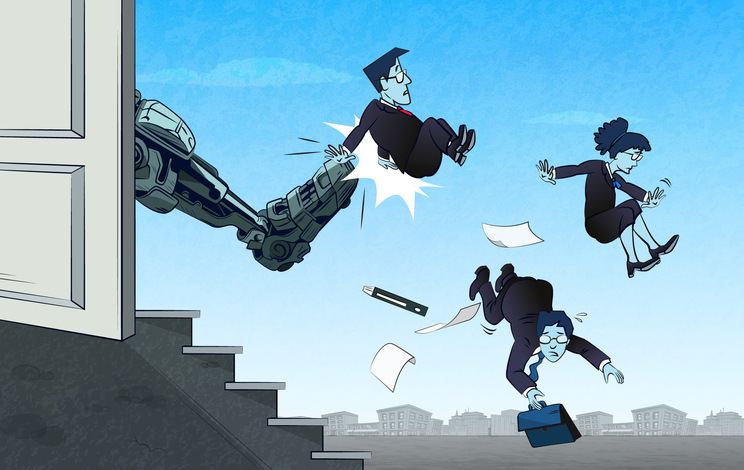
Meanwhile, the burgeoning field of artificial intelligence poses another threat to economic stability. With AI poised to disrupt numerous job sectors, the livelihoods of many are at risk. Despite the promise of efficiency and innovation, the economic trade-offs could be severe. If AI fails to be profitable, the substantial investments into this technology could lead to substantial GDP losses, risking a recession. Conversely, if AI thrives, the resultant job displacement could still cripple consumer spending and drive the economy into downturn.
Thus, Americans face a grim choice matrix: manage with rising fuel costs without succumbing to a recession, adapt to an AI-driven economy at the cost of traditional jobs, or navigate potential economic contraction if AI investments falter. Each scenario comes with significant challenges and no clear solution in sight, leaving the public to ponder the lesser of multiple evils as they consider the future economic landscape.